Friday, August 13, 2010

Helen Frankenthaler (abstract expressionist)

Helen Frankenthaler is an American abstract expressionist painter. She introduced a new style of abstraction that became known as Color Field. As a New York native, she was influenced by Hans Hofman and Jackson Pollack. She developed her own abstract style, inventing her own language of expression through color. She started experimenting with stain painting, where an unstretched and unprimed canvas lying on the floor would be treated with heavily diluted oil-based paints to be soaked directly into the fabric. She created silky pools of color that, although abstract, evoked images of landscapes, creating moods and ambiance.

Wednesday, August 11, 2010

Miriam Beerman (Expressionist/"Colorist")

Constantly being reminded that the world is unjust, Miriam Beerman is haunted by perpetrators of evil. Her dark expressionistic representation of the world resembles Goya in its unapologetic nature, yet instead of the villains being portrayed, it’s the victim. Being Jewish, she feels heavily connected to the occurrences of the Nazi Holocaust. Much of her work is taken from that injustice. Beerman is one of the first women to have a solo exhibit in the United States. She is admired by the many women artist who have come after her.

Tuesday, July 27, 2010

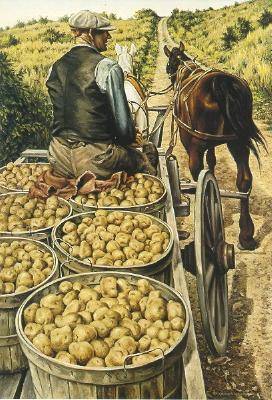
Clarence Holbrook Carter (American Artist)

Clarence Holbrook Carter was born in Portsmouth, Ohio. He studied at the Cleveland School of Art from 1923 to 1927. He then studied with Hans Hofmann in Capri, Italy in the summer of 1927. Throughout the 1930s and 40s he was known for his realist painting of rural America and the burden brought on Americans by the Great Depression. By the end of the Second World War, he had adopted a more surrealist approach to painting. Accomplishments in the field of advertising design encouraged experimentation and abstraction in his work. During the 1950s and 1960s, his work took on an increasingly surrealistic style with monsters and imaginary animals stalking fanciful landscapes. He had a series of paintings of oversized animals leering at the viewer over a large wall. In later years he depicted floating, transparent ovoid shapes transposed onto architectural landscapes, representing the Carter’s conception of the human spirit striving for perfection.


Ch'iu Ying (Chinese Painter)

From a humble background, born to a peasant family, Ch’iu Ying (1494-1552) is said to have started as a lacquer artisan. He later excelled at painting landscapes and figures. In his early years, he studied under Chou Chin (ca. 1460-1535), but later he met T’an Yin and Wen Cheng-ming of Soochow. He also turned to the essence of T'ang and Sung masters to create a style of his own. During his career, he was invited by famous collectors to paint at their residences, where Ch'iu had the opportunity to copy the works in their collections and learn more about ancient styles. With his fine and beautiful style, Ch'iu Ying was known as one of the Four Masters of the Ming. His fine-style figure paintings follow the T'ang and Sung models in a beautifully delicate. Even during his lifetime, Ch'iu Ying was praised and his influence spread to literati, folk, and court painting of the Ming and Ch'ing, serving as testimony to his reputation as a painter of unsurpassed skill.
Specializing in the gongbi brush technique, he painted in ink washes and used the green-and-blue style. He painted with the support of wealthy patrons, creating images of flowers, gardens, religious subjects, and landscapes in the fashions of the Ming Dynasty.

Monday, July 26, 2010

Maurice de Vlaminck

Born in France in 1876, Maurice de Vlaminck learned to play the violin at a young age and studied painting in his late teens. Along with music and painting, he was a writer of poetry and mildly pornographic novels in 1902 and 1903. Between the years 1904 and 1908 he was considered one of the key artists in the Fauve movement of modern artists who had a similar avant-garde use of intense color. Ignoring details he used landscapes to merely express mood through the use of violent color and brushwork. He began experimenting with “deconstruction,” moving from lack of detail to dabs and streaks of color that convey a sense of motion. His later work displayed a dark palette, punctuated by heavy strokes of contrasting white paint. He died in 1958.


Marcel Vertes (impressionist)


Marcel Vertes was a Hungarian painter, printmaker, illustrator, and costume designer who was born in 1895. He studied art in Paris and followed in the footsteps of the great French impressionists. At his prime in the 1920’s, he perfectly captured the spirit and culture of the wild and vibrant decade through his lithographs and paintings. He later had to flee to the United States during the Second World War. Living in New York City as an already established artist, he continued his work and made great strides in book illustration. He won two academy awards (best art direction and best costume design) for his work in the original 1952 film, Moulin Rouge at the end of his career.

Earnest Patton (folk artist)

Earnest Patton is a wood carver from Kentucky. This weathered, bearded, rugged mountain man was cousin to folk artist sculptor Edgar Tolson. Earnest and his wife in the 1970s made frequent visits to Edgar’s home which is where he learned the essentials of wood carving. Though his style and content are similar to Edgar, his figures are twice the size and hold a different feeling, emphasizing different aspects of the structures.

Earl Gray (folk artist)

In 1990, Earl took a house-painting job for a woman named Kate McComas. Kate says he was an extremely hard worker. On a rare lunch break, Earl carved Kate a back-scratcher. She was taken by the craftsmanship of the piece and asked to see more. Earl brought her a shoe box full of small pieces and it was then evident that he had been carving for some time. Kate happened to be a docent at the Huntington Museum of Art. She showed the carvings to head curator Eason Eige and he immediately wanted to buy Earl’s work. Eason began promoting, and Earl began to get noticed on a much wider scale. Earl took his art to the next level, into carving stone. He regularly carved faces in his sculptures. Learning through trial and error he developed his own style using the tools and material of his choice. His vision, however, would not have been acknowledged without the help of Eason Eige. Six years later, Earl carved a structure of Eason and his dog Lillie Mae which the museum now holds.

Friday, July 23, 2010

Four Themes in Folk Art

Four Themes in Folk Art was a hit! It's still up for another week or so if you've been meaning to check it out, you're almost out of time. Here were some pictures taken of the exhibit.

Music is the main source of storytelling in old Appalachia, and it remains an important part of the culture today. Music is not only entertainment; it is an art form, a pastime, and a way of life.


Animals are loved, trained, feared, hunted, and respected. Appalachian folks have them as pets, raise them on their farms, and are surrounded by them in the wild mountains. In Folk Art, animals represent different aspects of Appalachian mythology such as snakes representing the devil and temptation, while Birds often represent love, peace, and freedom.


Religion is a large part of Appalachian life. All of these artists were born and raised less than 60 miles from where the Second Great Awakening began in Cane Ridge, in 1801. The early nineteenth century religious movement still has a large impact on the culture of the area.


Death is a part of every culture, and every culture has its own way of dealing with it. Whether it is the death of a loved one, death of many in a human catastrophe, a death from a war, or the inevitable death of everyone that hangs over our head like a dark cloud, Appalachian art reflects its own cultural understanding of death.


Within the exhibit there are 48 hand-painted signs containing research on the artist and the art. I spent around 100 hours working on it. 20 of those hours were probably working on this blog.

Gerald "Creative" Deprie (Folk Artist)


Gerald "Creative" DePrie is a Kentucky native folk artist who lived from 1935 to 1999. The Huntington Museum of Art has 5 pieces and he is included in two books about folk art. He had a very eccentric personality.

This is Gerald C. DePrie’s (1935-1999) autobiography. It was handwritten with a pencil, in large lettering, on one side of 18 pages of copy paper in 1990. DePrie had no regard for punctuation, rarely using periods and obscurely using commas. He also uses upper case and lower case in strange ways. I’ve taken on several corrections (spelling and punctuations) in order for it to be readable. I’ve left some grammatical errors to preserve the regional dialect. This autobiography is most effective read in its original hand written form.

To my knowledge, there is no record of how we acquired this original autobiography. The Huntington Museum of Art had a good personal relationship with Mr. DePrie and it could be very possible that he personally brought it to the facility.


A life long autobiography of Gerald C. DePrie (May 6, 1935)

I would like to go back to the year 1945. On Staunton Rd, before they built the Hatfield Mansion, there was a cemetery on that ground. So what they did, they up lifted all the tombstones and heaved them all down the embankment and into the Ohio River and then they built the mansion. After some time living there, the son killed his parents. My Grandfather told me about the happening because on that same hill sight my mom used to look for arrowheads when she was a teen-ager and then when I was growing up I became interested in looking for them also. So me and Bobby Thompson, a “boyfriend”, we would go up to that same hill sight and look for arrowheads and then that’s when I noticed some tombstones still stuck on the other side of the hill sloping down in the Ohio River.

Our next door neighbors, the Newsomes, they had two sons. Mom knew the newsome boy’s because she grew up with them. My Grandfather bought the home on Witters Rd. after moving here from Cincinnati.

Now to go back to the year 1938. Bill Newsome drowned in the Ohio River, I was only three years when that happened, as I understand I really make Mom heartsick. This happened when they all where pretty close friends. He was only 22 years old.

Between the ages of 4 and 7 Mom or my Grandmother would make a bedroom out of the sleeping porch. It was sort of a half room just enough to put a baby bed or a half bed in that room, there was a dresser and mirror and a very old rocking chair and also a closet. The sleeping porch was all wood floor except for maybe a small oval hoafs rug.

I will go back to 1942 and 1943. I was very scared to go back to that room and I remember this even at the ages 4 and seven. The rocking chair did rock all by itself with nobody helping it.
I vaguely remember at where it was sitting and all of the sudden it began to rock sometimes very fast it even seemed to walk towards me while still rocking, it terrified me in such a way that I would not go in that room at all. The rocking chair was eventually taken out of the room. I don’t know what ever became of it. The rocking chair was an antique as I recall now because it look ancient even then. Because I still remember what it looked like even to this day.

How I know that above is factual because, we where a music family at the age of twelve or maybe thirteen I heard the song Stormy Weather in the Lyrics of that song mentions a rocking chair. So one day we where listening to the radio we where all at home, we could hear the song as it was playing, I asked mom about the stormy weather song I said mom the rocking chair that isn’t the same one that was in the sleeping porch when I slept there is it? She said no in so many words but also went on commenting that I would relate the two together and also there was still talk about the stormy weather song and the rocking chair in the sleeping porch even until some years later, mom would still maybe comment on that song.

Me and Bobby Thompson went out to do some digging the idea we had was to build an underground tree house. As I look back it was a type of bunker we put boards on top of it. It was three feet deep approx, 2ft width but when we started to dig, we dug into a groun pocket or what we thought was a worm pocket or some kind of insect nest, but we sure found out in a hurry what we dug into. I didn’t know Black Widow’s spiders burrowed into the ground because what we saw was sure something to see. We actually dug into a nest of Black Widow spiders. We counted possibly 6 Black Widow’s so what we did was very very stupid. I went back to the house and got a mason jar. So what Bobby and I did, we took the jar laid, the jar down at the entrance of the nest they were crawling around in and out of the nest so we waited until some crawled into the jar and sure enough two or three got into the jar we capped the mason jar and ran upstairs. I showed these spiders to my Mom and she said they where “BLACK WIDOWS” they have a red hour glass on their back side and these spiders were deadly. So we took the jar of poisonous spiders and buried them in the ground.

When I do drawing I don’t know this is or if it’s sheer fantasy on my part but I am in a polar position when I draw a picture. I try to perceive myself in somewhat or somehow in a positive-alignment or perfect balance of myself in positioning of my art or in fact anything I do, I try to do in a positive manner.

Now I would like to go back to our deceased neighbor Bill Newsome because it is only a gut notion of mine or maybe just a wild guess or maybe that his spirit really did haunt this part of our house as I understand they where close neighbors because even to this day mom keeps his picture up standing some place everywhere they have moved or lived in the past 50 years. His picture still remains standing in there home. Also they have a picture of Mrs. Newsome, also in memory, also which stands beside Bill’s.

Continuance of vital time period from 1980-1987 as I recorded this information of myself this will feature some of the most baffling mysteries of my life. In 1980 I would start to take walks and on my walks I would see things that I had no explanation for. What I’m trying to say is I would see things that would be a lost article such as everything and anything that would have belonged to a person now or 200 years ago lost artifacts on planet Earth.
Includes – solid gold rings, solid gold necklace chains, solid gold bracelets, solid gold pin with diamonds, gold coins, silver coins, coins that go back to 1915, 1882, 1913, 1925, 1890, 1910, ect ect ect----

Other collectables: are very old bottles, Iron horse that was once on a weather vain. Age of the
artifact possible 100 years. Lost money: astronomical sum, have no idea the amount, in coins and paper money a ball park guess, I would guess at $1,500. This money was found between 1975 up until now, 1990. To find lost money had many peculiar traces of the unknown. Example: on Olive Street Walnut Hills area, I would walk up to school with Kate one morning. I took a walk up to the village on my way I looked into Mrs. Humpheries drive-way porch. The season was winter. What I saw was a $5.00 Bill laying at the very top of the drive way. I went up and sure enough it was just that a five dollar bill, but the next day on my way up the same hill “Olive street”, I was taking Kathryn to our lady of Fatima school, when I noticed something odd, you cannot see up there from the side walk. “How could this have happened, “It is absolutely impossible to see from the side walk into Mrs. Humphery’s car port drive way. HOW COULD THIS HAVE HAPPENED??-?? It is totally impossible but that one morning when I saw the $5.00 dollar bill laying up there. I walked up there and picked it up but how I ever saw up there from the sidewalk is totally of the unknown and my candid opinion is something took place that winter morning that has no rational explanation.

Tuesday, June 8, 2010

Jean Thomas – The Traipsin’ Woman

Jean Thomas was born Jeanette Mary Francis de Assisi Aloysius Narcissus Garfield Bell in Ashland, Kentucky in 1881. As a teenager, she attended business school to learn stenography, defying convention, giving her the nickname, “The Traipsin’ Woman”. She went on to become a court reporter, traveling by jolt wagon to courts across the mountains of East Kentucky. Along the way, she was exposed to the folkways traditions of the mountain people, learning their music, dialect, and clothing. She became very interested in folk songs that were rooted in England.

She founded the American Folk Song Festival, hosted it at her home near Ashland, Kentucky from 1930 to 1972. She is credited in shining a light on Appalachian folk music for the first time. She took pictures and collected quilts of the talented mountain folks along the way. She wrote Devil’s Ditties (1931), The Traipsin’ Woman (1933), and The Sun Shines Bright (1940) along with many papers, about Appalachian folkways. She made recordings of the musicians she became familiar with which can be found in the Smithsonian Folkways collection. Some of those recordings were put on Harry Smith’s Anthology of American Folk Music which is said to be the most influential compilation in the history of recording music.


"In 1926 Jean Thomas met William Day, a blind fiddler from Rowan County. Using the skills she had acquired as press agent and manager, she changed his name to Jilson Settles, secured recording contracts and booked him (as the “Singin Fiddler from Lost Hope Hollow”) in theaters. Day eventually played in London’s Royal Albert Hall. He was the subject of Thomas’ first book, Devil’s Ditties (1931)."


She died 1982, living to be 101.